Charles Lee
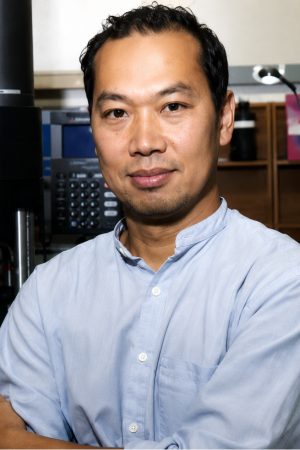
Charles Lee
Education:
Ph.D. Mechanical Engineering, University of California, Berkeley, 1989. M.S. Mechanical Engineering, University of California, Berkeley 1985. B.S. Bioengineering, University of California, Berkeley 1983.
Research:
Heat and mass transfer Biomedical Engineering Biomathematical modeling Biodevices
Bioheat and Mass Transfer Laboratory:
Research: Currently we are working in a number of research areas related to Biomedical
Engineering
Cryopreservation of organs, tissues, organoids, and cells for transplantation and cell
therapy :
Improved methods to cryopreserve organs, tissues, organoids and cells can lead to significant
advancements in transplantation and cell therapies. Removing time constraints between donor
organ harvesting and usage can provide multiple treatment. Three subprojects related to this
work are:
A. Developing rapid conduction device to vitrify and rewarm large quantities of organoids for
cell therapy. My group is developing a portable self-containing device that can vitrify and
rewarm up to 50 grams of cellular material for large scale applications including bioartificial
livers and cell transplantation. Testing of the device on a small scale will provide proof of
concept prior to scale to the desired quantity.
B. Investigation of cryoprotectant concentrations on organoid vitrification and viability. As larger
quantities of organoids are needed for vitrification, higher concentrations of cryoprotectants can
reduce the critical cooling and warming rates. Our group is investigating the cryoprotectant
limits while maintaining high viability and functionality.
C. Subzero preservation of whole organs can increase storage time thus allowing increased
transport time and tissue matching. This project investigates whether controlled pressurization
of a chamber containing the organ can improve function and reduce damage during cold
storage.
D. Collaboration with the University of Minnesota Medical School Department of
Transplantation, Mayo Clinic Institute for Regenerative Medicine, Carnegie Mellon University
and Ponte Scientific are ongoing with these projects.